Travel Marketing: Turning Visibility into Real Demand

Travel Marketing: Turning Visibility into Real Demand

In the travel industry, simply being present is not enough. What truly matters is whether your brand becomes visible at the right moment, sparks interest, and builds trust. That is exactly the role of effective travel marketing: it doesn’t just place offers in the market—it places them in the minds of your target audience. Whether it’s a hotel, tour operator, destination, or travel agency—successful travel marketing combines strategy with emotion. It ensures that attention turns into real demand and that initial touchpoints lead to actual booking impulses.

What Defines Successful Travel Marketing Today

Travel marketing includes all measures used by tourism businesses to make their services visible, sharpen their brand, and target their audiences effectively. This includes, among others, content marketing, social media, SEO, email marketing, and performance-driven campaigns.

The key difference from traditional advertising lies in its impact: travel marketing doesn’t just sell a service—it sells a feeling. It’s about anticipation, trust, orientation, and the ability to reach people exactly at the point where inspiration gradually becomes a decision.

What Really Matters

Only when these elements work together does marketing not just generate reach, but real impact.

  • clear positioning
  • relevant messaging
  • strong content
  • the right channels
  • a consistent customer journey

Only when these elements work together does marketing not just generate reach, but real impact.


The Key Challenge: Staying Relevant

Many tourism offerings deliver excellent services, yet often get lost among a flood of similar messages. This is one of the biggest challenges in travel marketing: brands that appear interchangeable are quickly overlooked.

In a market full of similar messages, it’s not the loudest brands that win—but those that communicate clearly and distinctly. Brands that show what they stand for, who they target, and why they are the right choice gain a real competitive advantage.

Typical Challenges at a Glance

  • strong competition
  • high comparability of offers
  • unclear brand messaging
  • lack of differentiation
  • wasted reach in targeting

The good news: this is also where the greatest potential lies. With a clear strategy, visibility, relevance, and brand impact can be significantly improved.

Which Travel Marketing Measures Are Most Effective

Travel decisions rarely happen in a single moment. People get inspired, compare offers, save content, read reviews, and often return later to complete a booking. That’s why successful travel marketing requires communication across multiple touchpoints.

Particularly effective are measures that work together seamlessly: social media creates awareness and inspiration, content marketing builds trust, SEO ensures that users find the right offers, and SEA reaches potential customers at the right moment. Mobile lead funnels enable smooth interaction on the go, email marketing deepens relationships, and remarketing brings interested users back. This creates an integrated system that doesn’t just get seen—but builds real connections.

The key is not to do everything on every channel, but to orchestrate measures so they collectively support your goals.


Targeting Audiences Precisely Instead of Broadcasting Broadly

The more precise the targeting, the stronger the impact. People respond to content that matches their needs, travel motivations, and interests. Generic messages, on the other hand, often feel too vague.

That’s why personalization is so important in travel marketing. Aligning content and campaigns with specific audiences increases not only the relevance of communication but also the likelihood that interest turns into action.
Travel Marketing Requires Tailored Strategies

Not every tourism brand pursues the same goals—and this is where success is determined.

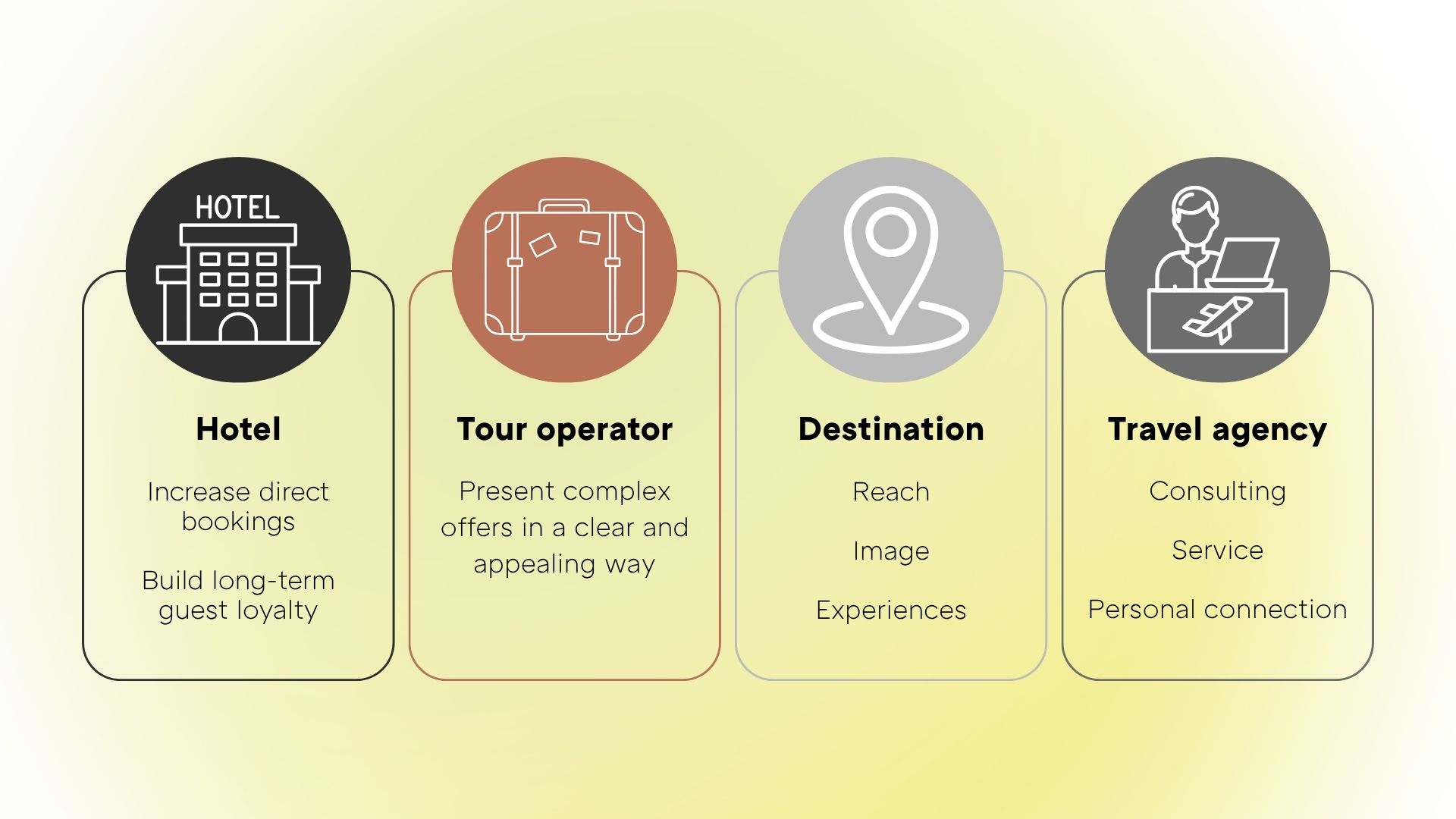
A hotel aims to increase direct bookings and build long-term guest loyalty, while a tour operator must present complex offerings in a clear and appealing way. Destinations thrive on reach, image, and experiences, whereas travel agencies excel through consultation, service, and personal connection.

Effective travel marketing takes these differences into account and develops a strategy tailored precisely to each offering. This allows every brand to reach its audience in the right way and stand out sustainably from competitors.

Relevance Beats Reach

Successful travel marketing is not created through mere presence. It emerges when brands manage to be relevant—with clear messages, targeted content, and communication that truly resonates with people.

Those who understand their audiences, use their channels strategically, and consistently focus their marketing on impact lay the foundation for sustainable growth. KITICON Global Networks supports companies in the travel industry in achieving exactly this impact—strategically, digitally, and with a clear focus on markets, brands, and audiences.

Want to sharpen your travel marketing and turn visibility into demand?

Any questions?

We'd love to assist you.

Janina Trunk

Senior Project and Marketing Manager

Frequently asked questions

How Can Multi-Channel Personalization and Marketing Automation Increase Efficiency in Travel Marketing?

Multi-channel personalization ensures that customers are addressed individually across various channels such as email, social media, websites, and mobile platforms. Marketing automation streamlines repetitive tasks like sending personalized messages or follow-ups. This combination increases the relevance of communication, saves resources, and enables a consistent customer journey. As a result, travel companies can maximize their marketing efficiency while simultaneously improving customer satisfaction.

Why Are Target Group Segmentation and Data-Driven Targeting So Important in Travel Marketing?

Target group segmentation allows companies to identify different customer groups with specific needs and behaviors. Data-driven targeting uses these insights to precisely tailor marketing campaigns and minimize wasted reach. This leads to higher click-through rates, better conversion rates, and more efficient use of budgets. In travel marketing, this approach is essential for addressing individual travel interests and maximizing the return on investment (ROI) of campaigns.

What Advantages Do Email Marketing, Remarketing, and Review Management Offer for Increasing Bookings in Travel Marketing?

Email marketing enables personalized and direct communication with prospects and existing customers, which increases conversion rates. Remarketing targets users who have already shown interest and brings them back to complete their booking. Review management improves online reputation, builds trust, and positively influences purchase decisions. Together, these measures form an effective strategy for sustainably increasing bookings and strengthening customer loyalty.

How Can Social Media, Influencer Marketing, and User-Generated Content Increase Reach in Travel Marketing?

Social media platforms are key channels for authentically reaching target audiences and inspiring them with engaging content. Influencer marketing leverages the credibility of opinion leaders to build trust and organically expand reach. User-generated content, such as reviews and photos, enhances credibility and encourages interaction. The combination of these elements increases visibility, supports brand building, and contributes to sustainable growth in bookings.

How Can Virtual Reality (VR) and Augmented Reality (AR) Be Used in Travel Marketing to Make Travel Experiences Digitally Accessible?

Virtual reality (VR) and augmented reality (AR) offer immersive ways to explore travel destinations and accommodations virtually before making a booking. VR enables realistic 360-degree tours, while AR overlays digital information onto the real-world environment. These technologies enhance emotional engagement, increase trust in the offering, and support purchase decisions. They are particularly effective for presenting complex travel experiences in a vivid way and standing out from competitors.

What Role Do Artificial Intelligence, Chatbots, and Voice Search Play in Modern Travel Marketing?

Artificial intelligence (AI) is revolutionizing travel marketing through automated data analysis, personalized recommendations, and efficient customer communication. Chatbots enable fast and individualized responses to customer inquiries around the clock, improve the user experience, and reduce the workload of customer service teams. Voice search is becoming increasingly important, as many users search for travel information using voice commands. By optimizing for voice assistants, travel companies can increase their visibility and improve interaction with potential customers.

How Can Personalization in Travel Marketing Help Target the Right Audience?

Personalization in travel marketing means tailoring marketing content and offers to the individual needs and preferences of customers. Through data-driven audience segmentation and the use of automation, relevant messages can be delivered across various channels. This increases the relevance of communication, boosts conversion rates, and strengthens customer loyalty. Personalized communication takes into account booking histories, interests, and demographic characteristics to create tailored travel experiences.

What Challenges Exist in Travel Marketing and How Can They Be Successfully Managed?

The biggest challenges in travel marketing include increasing digitalization, rising customer expectations for personalized offers, data protection regulations such as cookie restrictions, and the complexity of multi-channel communication. Successfully managing these challenges requires the use of data-driven audience segmentation, the expansion of automation and multi-channel personalization, and the integration of innovative technologies such as artificial intelligence and chatbots to efficiently and individually meet customer needs.

What is Travel Marketing and Why Is It Important for the Competitiveness of Travel Companies?

Travel marketing, also known as travel marketing, includes all strategic measures used by travel providers such as hotels, airlines, destinations, and travel agencies to specifically promote their offerings. It is crucial for competitiveness because it helps increase visibility, address target audiences individually, and sustainably boost bookings. Through effective travel marketing, companies can differentiate themselves in a highly competitive market and build long-term customer relationships.

Strong brands. Clear positioning. Lasting impact.

With strategic branding, we create brand identities that build trust, strengthen recognition, and help you reach your target audience effectively. From brand strategy and design to consistent brand communication, we develop powerful brand experiences with long-term impact.

Strong brands. Clear positioning. Lasting impact.

Mehr KITICON News

“Coolcation” as the new summer luxury: Signature Collection Travel focuses on Finnish Lapland
News

“Coolcation” as the new summer luxury: Signature Collection Travel focuses on Finnish Lapland

Mehr KITICON News
Worldia invites travel agencies to Australia masterclass
News

Worldia invites travel agencies to Australia masterclass

Mehr KITICON News
KITICON develops award-winning website for SCHÖNES LEBEN Group
News

KITICON develops award-winning website for SCHÖNES LEBEN Group

Mehr KITICON News
View all news